NYC Tech Events Founders Actually Put on Their Calendar
Curated dinners and recurring venues beat generic events for founders seeking real connections.

NYC tech events are worth a founder’s time when the room is small enough for people to talk, the guests are chosen with care, and there is trust before anyone arrives. The useful calendar is the one that puts a founder among the right people often enough for introductions to become relationships.
Why New York's event density creates a filtering problem, not an opportunity
On any given Tuesday, a founder in New York can choose from dozens of tech events. Each listing offers a way to reach people, learn something, or get to know someone, often with a panel attached. The calendar offers few ways to tell which invitation deserves an evening that could otherwise go to customers, hiring, or building.
That abundance has produced a secondary market of filtering services. When people need help choosing where to go to meet people, the networking industry has its own networking problem. An event listing can say what is on the agenda without saying whether anyone there can help with a founder’s next decision.
The obvious objection is that more events mean more chances to find something good. That works only if attendance costs nothing. For a founder, time is the binding constraint, and a low-signal evening can displace a better one. Choosing where to go takes skill and deserves more time than a task squeezed in before leaving the office.
Why NYC's startup character shapes which events actually carry signal
New York founders build close to their customers, including banks, hospitals, brands, and landlords. The useful room is often where a founder’s industry meets the people building for it, rather than where everyone shares a broad interest in technology. A customer does not become more relevant because the invitation has a better font.
A fintech, enterprise AI, or devtools gathering draws from a narrower pool of buyers, operators, and investors. Those people are more likely to share the context behind a product or buying decision. People can spend less time explaining why the problem exists before they start talking about how to solve it.
A generic tech event has a different use. It offers breadth, but breadth also means a founder may spend much of the evening finding the small part of the room that overlaps with their work.
Even in the right vertical, trust takes time. Customer proximity creates the possibility of useful contact, while deal flow may take longer than a first conversation. That lag is a reason to value recurrence. The way the city is built helps founders find whom to meet, while the calendar shapes whether they will see those people again.
What the anchor event — NY Tech Week — actually is and how founders should use it
NY Tech Week 2026 ran June 1–7, presented by a16z, with more than 1,500 events. It was not a conference with a single venue or ticket. Founders applied or signed up to attend individual events, organized into tracks including Founders, Investors, Students, Fintech, and Hackathons. The week provided coordination.
That distinction changes what its size means. A huge program gives founders more people to meet, but some of those people will have more to offer them than others. Founders have to choose which events are worth their time within one week. Treating the whole program as an opportunity is a little like treating the entire subway map as a destination.
The a16z Central Park “Watts & Multiples” morning ride at 8am Thursday makes the distinction concrete. People willing to join a group ride at that hour during Tech Week have selected themselves differently from people walking into a free panel.
NYTW 2026 also exposed an appetite for tech gatherings hosted in New York by people who actually know New York. A visiting conference can land in the city without becoming part of its community. Gatherings with local roots start with ties that go beyond the people visiting the city.
For founders, the practical approach is to treat NYTW as a week-long coordination layer. Choose three to five events ahead of time that require an application or are invite-only. Use open events to find the people who might invite you to the closed ones next year, rather than expecting every open gathering to deliver immediate results.
The recurring events worth tracking across the year, sorted by what they actually produce
Recurring events earn their place through what they produce, whether that is warm introductions, hires, or co-investor relationships. Most do not clear that bar simply by happening again. The format helps show what an event is good for, but who is in the room decides whether it gives a founder what they need. A regular date is not, by itself, a reason to keep it.
NY Tech Meetup, run by the NY Tech Alliance, has demo nights at Civic Hall each month. It serves as a long-standing community anchor. A founder looking for a connection to the broader tech community has a different goal from one looking for a specific investor introduction, and the same event need not serve both equally well.
Founders Live NYC is in the high-volume tier, where some nights have a better mix of people than others. Five founders each get a 99-second pitch followed by audience Q&A, and a crowd vote advances the winner toward regional qualifiers. The format favors practice and visibility over relationship depth.
AI Engineers Tech Talks runs monthly technical deep-dives, with past hosts including Harmonic, Instacart, Hebbia, and Noemica. The shared technical subject gives attendees a reason to talk beyond the fact that they work in tech. That narrower premise makes repeat attendance more useful than another evening spent discovering whether anyone shares the problem at hand.
Showing up to the same vertical meetup for three months in a row builds relationships, while going to three different events in three months brings business cards. The first pattern gives people a chance to become familiar. The second keeps restarting the introduction.
Why Betaworks deserves its own mention as a physical node in the recurring calendar
Betaworks, at 29 Little West 12th Street in the Meatpacking District, functions less like an event host than a recurring community with a mailing list. Its significance is not just that events happen there. The density and specificity of its programming let a consistent attendee encounter the same people through different subjects and formats. The room has continuity even when the agenda changes.
The GTM founder at Distribution Is Your Moat is the same person at the RAID talk six weeks later. A new topic need not mean starting from zero with a new crowd.
A talk and a meetup can contribute to the same relationship when the people overlap, while two identical networking nights can offer no continuity at all. Repeated presence in a small, curated room compounds faster than one-off attendance at large events. The dinner format takes that principle and makes it the center of the occasion.
Why the curated dinner is the format that actually produces warm introductions
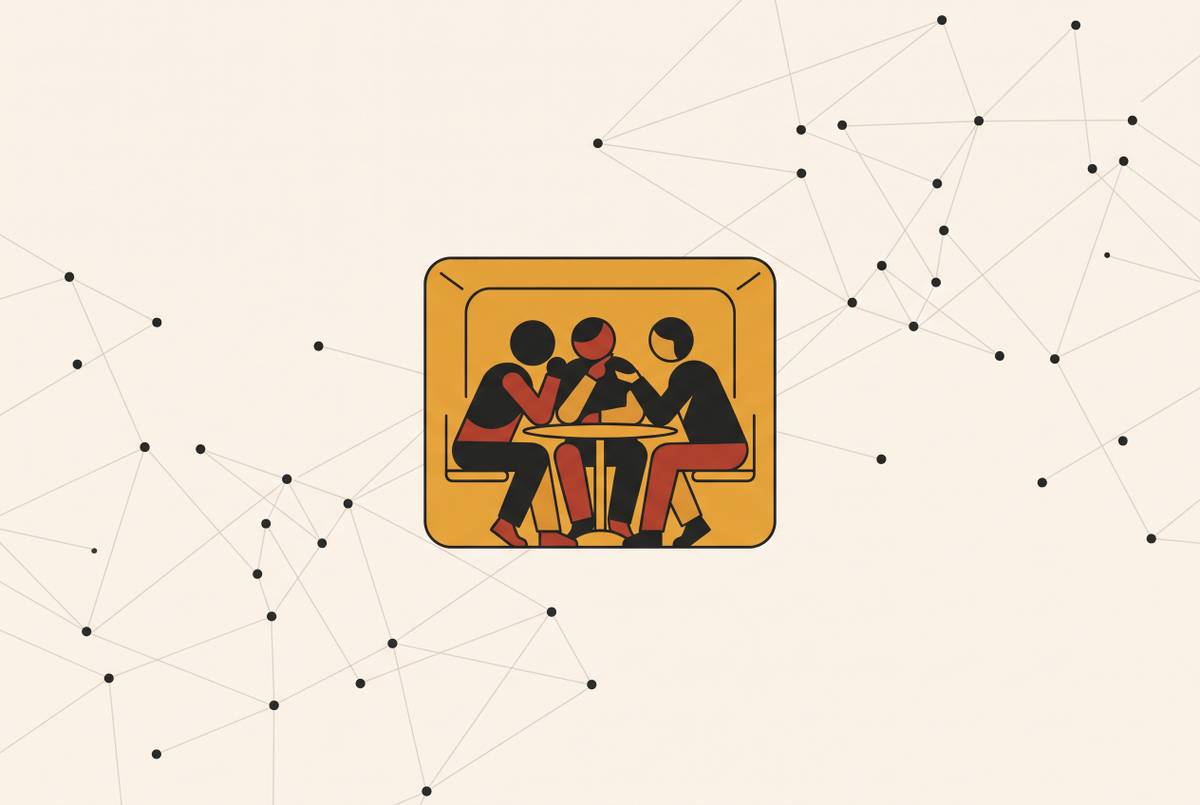
The curated dinner makes vetting the product. Small, application-based, and free of slides, it is the format founders credit for introductions, co-investors, and early hires that move their companies. Its appeal is not mysterious. People are there to talk to one another, and someone has already decided there is a reason they should.
A room of twelve to twenty-four people who cleared the same application begins with shared context and mutual accountability. That is different from asking 200 people at a happy hour to find their own relevant corners. The larger event can bring people close enough to talk. It cannot manufacture the same starting conditions simply by giving everyone a name tag and hoping for the best.
Those conditions explain the access pattern. Most of NYC’s top founder dinners are application-based or require a warm introduction. The gate is part of what makes the room useful, because selection establishes something about the people before they sit down. In the case of a warm introduction, the invitation also rests on an existing relationship.
The objection that gatekeeping is exclusionary identifies a real distinction but does not settle which format is useful. An open dinner serves a different purpose. It allows access without the same selection, while a vetted dinner trades that openness for a more specific room. Neither is inherently wrong, but comparing them as interchangeable products misses what each is designed to do.
Curation alone is not a promise of a useful introduction. The dinner still needs people whose work, needs, or experience overlap, so bringing people from the same field together still matters. Small size gives those people space to talk, vetting supplies a baseline of context, and recurrence lets familiarity develop. Together, those features address the weaknesses of indiscriminate event attendance without requiring founders to become full-time guests.
Warm introductions depend on that familiarity. Someone who knows both sides can connect people for a reason.
How to actually read the calendar — the three questions that separate signal from noise
A founder can assess an event listing in under two minutes by asking three questions. The first is how the room gets built. Open RSVP, selective application, and warm introduction each offer something different and show how much trust there may be before anyone sits down. An open door may suit the goal, but it should not be mistaken for a vetted room.
Second, a fintech event puts a fintech founder among potential customers, co-investors, and domain-specific hires. At a general startup networking event, that same founder competes for attention with everyone building everything.
Third, a one-time gathering produces one set of introductions, while a monthly event attended consistently for a quarter gives relationships time to develop. People who keep returning also select themselves for commitment. Recurrence is therefore more than scheduling convenience, because it changes what attendees can come to know about one another.
Applied to New York’s calendar, these questions favor curated dinners and recurring vertical meetups over large open happy hours, regardless of brand name or sponsor. Calendar tools and filtering services can help find events, but founders still have to judge how the people in the room are chosen. A polished listing is still only a listing. The founders with the strongest networks go to the right three events every month and keep coming back until people know them, before they need anything.