How to Run a Mastermind Group for Startup Founders
Founders need peers who push back, not cheerleaders or consultants billing by the hour.
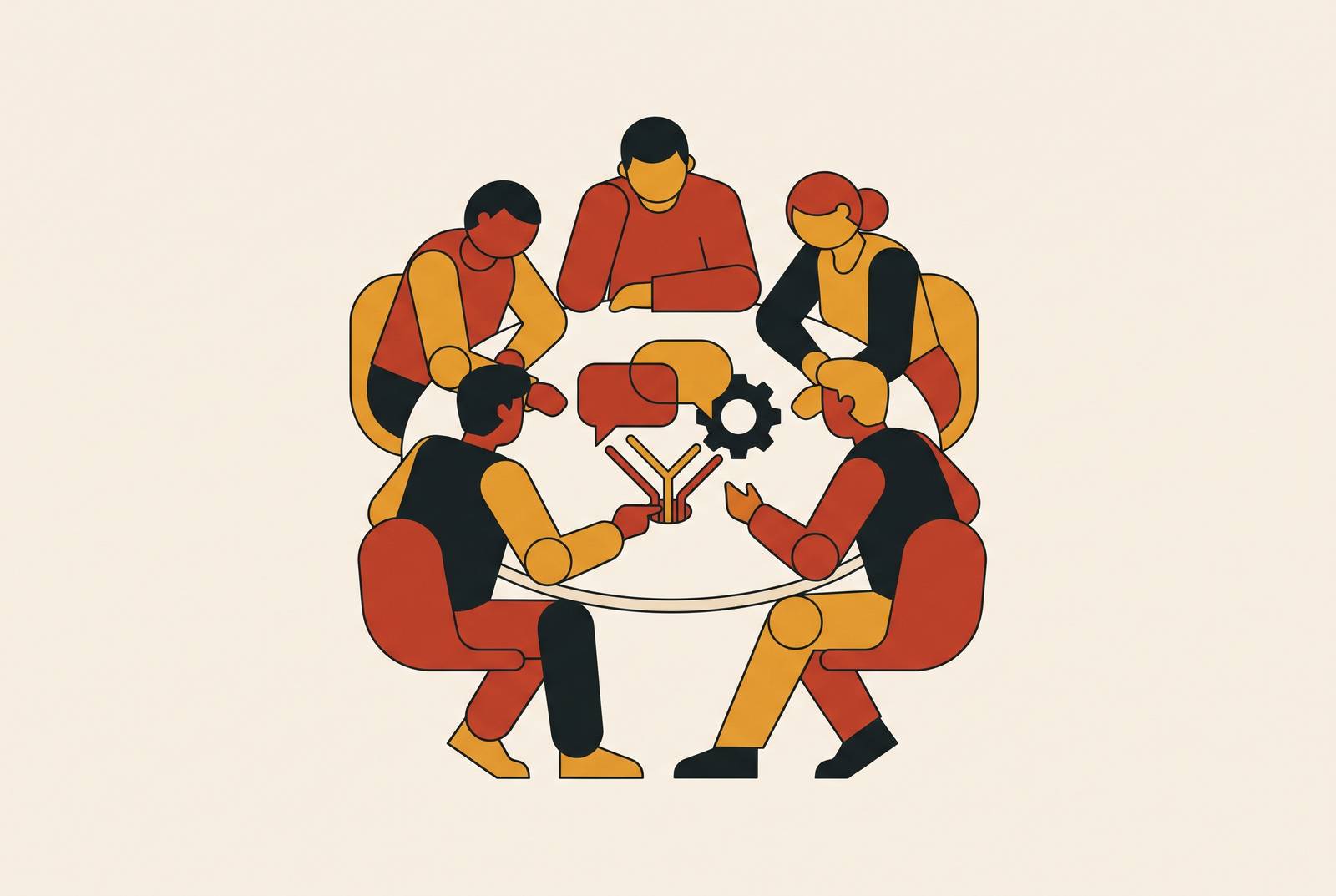
Get the size, the selection, and the structure right, and the group changes how founders make decisions. Get it wrong, and it dies quietly by the third meeting, the way most do. How to Run a Mastermind Group for Startup Founders.
Founder motivations and criteria for joining a mastermind group
Founders are rarely alone in the literal sense. There's a co-founder buried in product, a partner whose eyes glaze over at shop talk, a ChatGPT tab open at 1am. But none of them can look at the thing being built and say "this is off."" The co-founder is too buried in the product to see the forest. The partner's eyes glaze over the second the conversation turns to churn rates. And ChatGPT, for all its patience at 1am, can't tell you the thing you're building is off.
That's the actual gap. Founders will say they're looking for "a network." What they mean, once you dig past the word, is someone at their level who will push back. Not a cheerleader. Not a consultant billing by the hour. A peer.
The idea itself isn't new. Napoleon Hill coined the framing in the early 1900s after studying successful people and noticing that most of them belonged to some version of this kind of group. It's been around for decades since, and it's picked up serious momentum in just the last ten years. A precise definition helps here: a mastermind is a small, curated, recurring circle of peers who agree to mutual candor, structured discussion, confidentiality, and accountability around real business decisions. Think personal board of advisors, not networking mixer.
It should be separated from its neighbors, because the categories get blurred constantly. Coaching is one expert guiding a room. A mastermind is peer-to-peer, nobody's the expert. A conference or a one-off call ends when it ends. A mastermind is the same people, recurring, who remember what you said you'd do last time. Mentoring puts someone further along across the table from you. A mastermind puts equals in the same fight, at the same time.
None of this is for everyone. Founders who want a single expert to hand them the answer should hire a consultant. Founders looking for reassurance more than challenge will find the room uncomfortable, or worse, useless. Anyone who can't commit to a recurring cadence shouldn't join one, and pre-idea founders looking for community are better served elsewhere, at least for now.
New York doesn't make any of this less necessary, whatever the density of the city might suggest growthmentor.com. The pace is relentless, the social circle is wide, and almost nobody in it is at your exact stage. Proximity and hustle culture don't close that gap. A mastermind does.
Member selection and its effect on a group's potential
Who's in the room decides whether the whole thing works, full stop. Not the agenda. Not the software you use to schedule it. The people.
Stage and incentive alignment matter more than anything else on the list. Picture a room with a bootstrapped SaaS founder between $5K and $50K MRR, a founder for whom Vistage wanted CEOs with staff and Hampton wanted $3M+ in revenue, and free communities were full of people with ideas and no customers The 11 Best Mastermind Groups for Entrepreneurs in 2025 growthmentor.com. Their constraints don't overlap, so their challenges don't land, and the room becomes small talk with better lighting.
A few practical filters keep that from happening. Members shouldn't compete with each other, because confidentiality only holds when nobody has a stake in the outcome of what gets said. Stage should roughly match too. Mixing seasoned founders with people just starting out doesn't create mentorship, it creates disengagement, and the senior members check out first. Real operating experience matters more than ambition. Pick people who've actually started something, not people who plan to. And skill sets should complement rather than duplicate. Build the room like a band: someone on rhythm, someone on melody, someone willing to improvise when the song goes sideways.
Sitting down with each potential member before committing shapes the group's long-term success, since those pre-launch decisions determine outcomes more than any agenda or software.
One group built around exactly this logic: a mastermind for bootstrapped SaaS founders between $5,000 and $50,000 in monthly recurring revenue The 11 Best Mastermind Groups for Entrepreneurs in 2025 growthmentor.com. It exists because nothing else fit that stage. Larger CEO groups wanted staff and structure the founders didn't have yet The 11 Best Mastermind Groups for Entrepreneurs in 2025 growthmentor.com. Others wanted millions in revenue as a floor. The free communities were full of people with ideas and no customers, which is its own kind of room, just not the right one for someone already generating revenue The 11 Best Mastermind Groups for Entrepreneurs in 2025 growthmentor.com.
New York doesn't have an excuse for getting this wrong growthmentor.com. Ecosystem data from the state comptroller's office puts the city's startup population past seven thousand companies growthmentor.com. That's enough density at every stage and sector that "close enough" stops being a valid excuse for who's sitting at the table growthmentor.com.
Group size, meeting cadence, and the operating rules that must exist before the first session
Five to eight people is the number practitioners cite for a founder-specific mastermind, and the broader literature stretches that to six to twelve growthmentor.com. Smaller keeps things deep and keeps confidentiality intact, since it's harder to trust a room of twelve with something that could sink your company growthmentor.com.
Most people building a group start in the wrong place: Zoom links, Slack channels, a shared calendar invite. Logistics before purpose. Asked first, before any of that, is why the group should exist at all. What's it actually for? Once that's answered, everything downstream gets easier.
That answer should live in a written purpose statement, drafted before launch, refined out loud when members first convene, and revisited any time the group resets its membership. Everyone needs to actually buy into it, since this is a partnership among equals, not a service one person is providing to the rest.
A handful of operating rules need to exist before the first session even starts. A fixed recurring schedule, same time, same cadence, because a schedule turns good intentions into a habit nobody can quietly skip. A rotating facilitator or a designated chair. A defined rotation for who gets the hot seat, so giving and taking stay balanced. One issue per hot seat, not a running list of everything going wrong that month. And questions before advice, every time, no exceptions.
Sessions typically run 60 to 120 minutes, depending on headcount and how many hot seats are on the docket growthmentor.com. Cadence is a real choice too: weekly, biweekly, or monthly, and the frequency decides how well members can track each other's businesses over time. The strongest groups meet often enough that nobody needs five minutes of throat-clearing just to catch everyone up before the real conversation starts growthmentor.com.
Confidentiality deserves its own line item, stated outright rather than assumed. An implicit "what happens here stays here" doesn't survive contact with actual pressure. It needs to be said, agreed to, and revisited. What gets decided before the first meeting shapes the group's future far more than any facilitation trick used after the fact.
How a well-run session flows, from check-in to commitment
A well-run session follows a shape, and the shape doesn't change much from group to group. Quick updates first: what did you do since we last spoke? Then one or more hot seats, where a member presents a real challenge and the group digs in. Then open brainstorming and feedback. Then commitments for the next stretch of time.
Two formats show up often enough in practice that they define how sessions are typically run. The other combines a rapid-fire round (everyone shares a quick recommendation, a podcast, a book, a quote) with a single 30-minute hot seat for one member on one specific issue.
The facilitator's job isn't to have answers. It's to keep the hot seat locked onto one clearly defined problem instead of letting it sprawl into three loosely connected ones. The strongest hot seats resist that sprawl on purpose.
Every session should close the same way: each member states one measurable commitment out loud before anyone logs off or leaves the room. That commitment gets written down in a shared note and gets checked against at the next meeting. This single habit, more than anything else, is what separates a mastermind from a good conversation over coffee. Members leave with a specific next step, not a warm feeling and a vague sense of clarity. In a well-run bi-weekly, 70-minute session, the flow moves from a 2-minute-per-person check-in on highs and lows to two round-table slots of 15 minutes each, each consisting of a short challenge presentation followed by group feedback.
The hot seat in depth, what it is, how to run it, and what makes it work
The hot seat is the engine of the whole format. One member brings a specific, real challenge, and for a set stretch of time, the entire group's attention belongs to that person. Focused, not broadcast to the room in general.
Focused beats broad for a reason. The hot seat forces deep, narrow problem-solving instead of generic advice, and the strongest groups aren't endless idea swaps, they're surgical about which problems get real time. That precision is the whole point.
The goal in the hot seat is not for the group to give advice but to help the member reach their own answer through shared experience and sharp questions. The goal in the hot seat is for the member to reach their own answer through shared experience and sharp questions from the group. It's to share relevant experience and ask sharp questions that help that member land on their own answer. Advice-giving feels productive in the moment and often isn't. Good questions do more, even when they feel slower.
There's also a paradox here. During someone's own hot seat, they're asking about what they already suspect they don't know. During everyone else's hot seat, they're picking up on what they didn't even know was a gap. Both are valuable. They just work in opposite directions.
Running it well takes discipline. One problem, not a sprawling situation report. Questions from the group before anyone offers advice. And a time limit enforced by the facilitator, not by the awkward social pressure of people shifting in their chairs. When the hot seat ends, the member in the chair states, specifically, what they'll do before the group meets again, and that gets written down rather than left to memory.
A founder loses something specific the day they stop having a boss: the experience of committing to something out loud, in front of someone who'll check on it later. The hot seat rebuilds that on a schedule, which is a strange kind of relief for people who otherwise answer to nobody.
The five failure modes that end groups before they matter
Mastermind failures aren't random. They cluster around five recurring causes, and most of those causes get set in motion long before the first meeting ever happens.
The first is the wrong cohort. Mismatched business models, funding structures, or incentives kill shared relevance fast, and the bootstrapped-founder-meets-venture-backed-founder-meets-agency-owner mix is the textbook version of this mistake. The second is an absence of real safety. One documented case involved a seven-person group where everyone performed success and quietly minimized whatever was actually going wrong. Nobody ever brought the real problem to the table, and a room that never sees a real problem can't do anything about one.
The third failure mode is confirmation bias, and it's the most common pattern by a wide margin. A founder shows up already leaning toward a decision and steers the conversation until the group confirms what they wanted to hear anyway. The fourth is structural drift. Good groups leave every session with clear action items. Groups without that discipline slide into casual networking calls, pleasant enough, but with no accountability and no measurable progress.
The fifth is avoiding the hard conversation about fit. Strong groups review membership periodically instead of treating every seat as permanent. The instinct to avoid confrontation, understandable as it is, produces a group that quietly stops serving anyone.
Here's the through-line connecting all five: failures two through five are downstream of failure one. Get the cohort wrong, and the room can't produce safety, can't resist the pull of confirmation bias, and can't hold onto its own structure. Good groups leave every session with clear action items; poorly organized ones turn into casual networking calls with little accountability or measurable progress.
Building psychological safety through explicit agreements
Safety in a group like this doesn't show up because everyone's being nice to each other. It's structural. It gets built by explicit agreements, made before anyone shares anything that could make them look bad.
A short list of agreements needs to be written down, not implied. Confidentiality, stated outright, not assumed by default. No crosstalk, since each member's hot seat belongs to them and nobody else. Questions before advice, so the room doesn't turn into a panel of people solving a problem they haven't fully heard yet. And no performing success, because the group isn't a status update, it's a place to bring the actual problem.
Groups have to foster real openness around both wins and failures, and that openness is what sparks creativity, accountability, and genuine connection between members. Skipping it turns the group into theater with better snacks.
Getting candor requires giving something up first: the habit of managing how you're perceived. Most environments founders operate in reward projecting confidence at all times. A mastermind flips that incentive on its head, on purpose, which is why it feels uncomfortable at first and useful not long after.
Trust compounds the longer a group stays together. A group that's met for a year has access to a different, deeper kind of conversation than a group still on its third meeting, which argues for cadence and continuity over constantly rotating fresh faces in and out. Accountability is safety in a durable form: knowing there's a group meeting regularly, one that understands your goals and remembers what you said last time, makes follow-through more likely. The real payoff rarely comes from a single lightning-bolt breakthrough. It comes from making slightly better decisions, consistently, over months and years.
Founder mastermind group costs and tier benefits
GrowthMentor's figures show pricing here spans a wide range.
At the free or community end, costs run from nothing up to about $500 a year, usually peer pods inside a larger community or self-organized groups, and this tier suits early founders working with a tight budget 17 Best Mastermind Groups for Entrepreneurs (2026). One step up, paid online groups run $100 to $1,000 a month, buying structured cohorts, actual matching, and some level of facilitation 17 Best Mastermind Groups for Entrepreneurs (2026) The 11 Best Mastermind Groups for Entrepreneurs in 2025. Premium in-person groups run $2,500 to $25,000 a year, chair-led CEO circles and retreats aimed at established owner-operators growthmentor.com Profitable Founder. And at the top, elite curated rooms run $25,000 to $100,000 or more annually, invite-only, often built around a big-name host, aimed at founders operating at seven-to-nine figure scale growthmentor.com The 11 Best Mastermind Groups for Entrepreneurs in 2025.
Price, on its own, tells you far less than fit does. A free peer pod with the right cohort will outperform an expensive room where the members don't match, every time 17 Best Mastermind Groups for Entrepreneurs (2026).
A few named examples illustrate the range. Another charges an initiation fee near $10,000, with annual dues in the $4,000 to $5,000 range The 11 Best Mastermind Groups for Entrepreneurs in 2025 growthmentor.com Profitable Founder. And the bootstrapped SaaS group mentioned earlier exists specifically because those revenue minimums exclude most founders who are still actively building, not yet running a company at that scale growthmentor.com.
What the higher tiers are actually selling is curation and consequence, since most of what gets discussed in a hot seat is knowledge anyone could access anyway. It's curation, and consequence. Paying $25,000 for a seat means every person at that table has made a costly enough commitment that they're going to show up and contribute growthmentor.com. Skin in the game, essentially, priced in dollars.
For most seed-to-Series-B founders in New York, the productive range is between paid online and premium in-person growthmentor.com. For most seed-to-Series-B founders, the productive range is the paid online to premium in-person tier (the elite rooms select for scale, not stage). Entrepreneurs' Organization (EO) charges global dues of approximately $2,470 annually plus a $3,500 initiation fee, and requires roughly $1M in annual revenue to qualify (growthmentor.com, The 11 Best Mastermind Groups for Entrepreneurs in 2025, Profitable Founder).
In-person, recurring meetings at a fixed table and the outcomes online formats don't produce
Format is a question about what kind of trust actually gets built. It's a question about what kind of trust actually gets built. Online groups have closed much of the availability gap with in-person ones, but availability was never the scarce ingredient. Depth was.
Sitting across a table from someone does something a video call doesn't. Members read each other's actual physical reactions to hard feedback, the wince, the pause, the exhale, not a slightly delayed video frame. Sharing a meal or a physical room creates a social context that quietly lowers everyone's instinct to perform. And returning to the same setting, session after session, builds a specific kind of shared memory that a rotating set of Zoom backgrounds never quite manages to replicate.
Trust, in the end, behaves like compound interest. A group that's shared the same table for a year has access to a category of conversation a brand-new group simply hasn't earned yet. A founder who has shared the same table for a year has access to a different quality of conversation; the founder who has watched another founder pivot three times has real context, not just a profile. SOURCE PAGES, what the pages behind the outline's links say.