Work Schedules and Routines of NYC Founders at Seed Stage
New York's seed founders make less money than their Series A counterparts, work more hours than seems reasonable, and do it all inside the densest, most competitive early-stage market in the country. That's the operating condition of the city. In 2025, Manhattan-based companies raised seed or Series A funding at a higher clip than San Francisco's, 543 to 486 by TechNYC's count, and the city put up $3.2 billion across more than 520 seed deals with over 50 dedicated seed funds actively writing checks.
That's the backdrop against which every NYC seed founder builds a week. Understanding the pay, the hours, the geography, and the events that structure the calendar tells you more about what it takes to survive seed in New York than any pitch deck ever could.
What seed-stage founders in NYC are actually paid — and what that says about the tradeoffs they're making
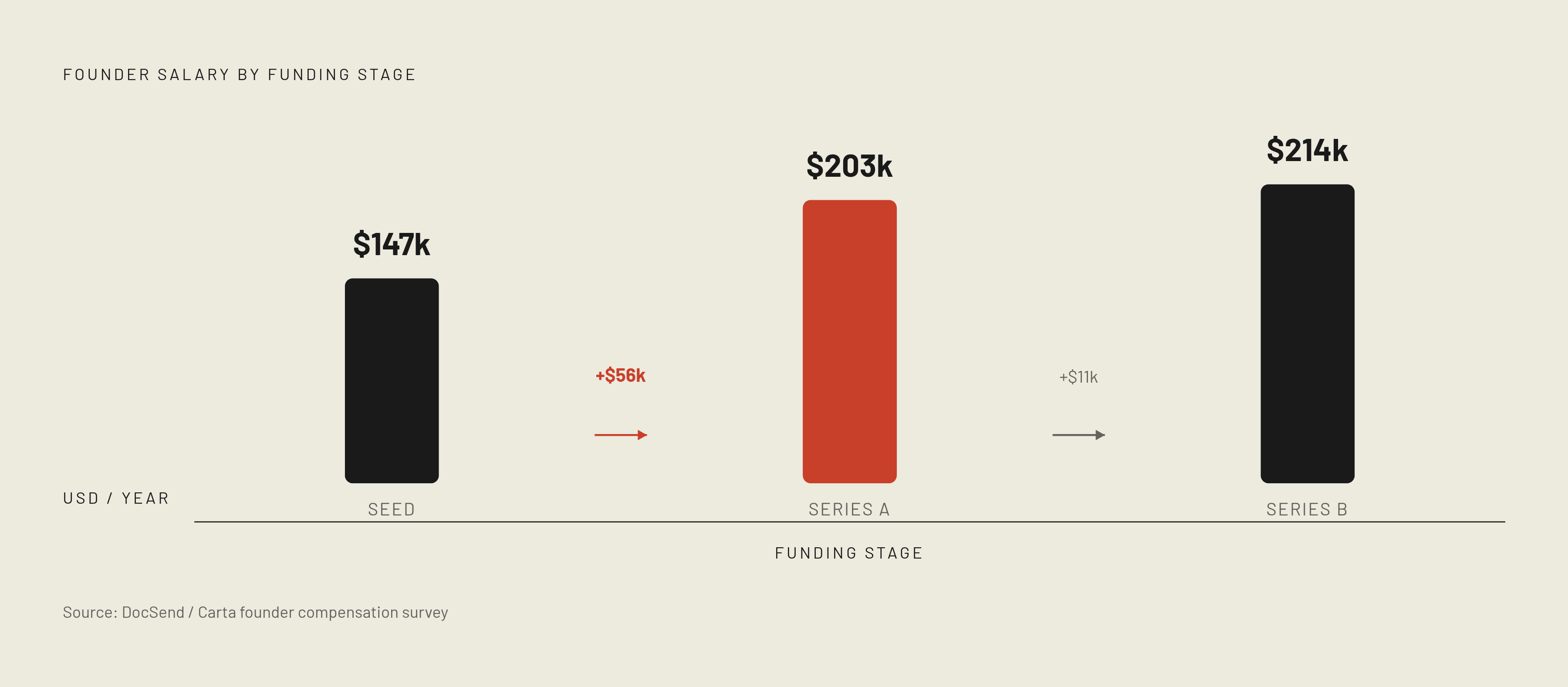
Start with the number, because it's the least glamorous part of the story. Average founder salary at seed stage hit $147,000 in 2025, according to Fondo's annual compensation data, up from $133,000 the year before. That sounds like a solid salary until you compare it to what the same founder might make one round later: $203,000 at Series A, $214,000 at Series B. Seed is, structurally, the worst-paid period relative to how much responsibility the job actually carries.
Now put that number in a New York context. This is a city where a one-bedroom near Union Square costs more than some people's mortgages upstate. A salary at that level in that environment is a constraint that shows up in the routine itself: fewer dinners out, less margin for a bad month, more pressure to make the raise land on schedule.
There's a slow correction happening underneath the headline number, too. The gender pay gap at the CEO level is narrowing: female CEO salaries grew 17.8% in 2025 versus 13.9% for male CEOs, tightening the gap from $14,000 down to $11,000. Progress, though not equality, and worth naming plainly rather than as a footnote.
The bigger point is what this pay level signals about the deal seed founders are making. They're trading a smaller paycheck today for equity upside and a shot at the next round, which is exactly why how they spend their hours matters so much more than how much they earn per hour. Calendar discipline isn't a nice-to-have at this stage. It's the whole game.
How seed founders in NYC actually divide their working hours
Ninety to 110 hours a week. That's the range First Round Capital has documented for early seed founders, and it's simply what the stage demands structurally. There's no version of building a company from zero that fits into 40 hours, not at this point in the lifecycle.
Those hours split into three buckets that show up regardless of what city you're in: finding product-market fit and talking to customers, hiring the first team, and raising capital. What's different at seed, and what Work-Bench (an NYC-based seed firm) describes plainly, is that these three things don't happen in sequence. They happen at the same time, every single day. A founder wakes up, closes a sales call, interviews a candidate, and takes an investor meeting, all before lunch. That's the job.
Fundraising eats more calendar time at seed than at any later stage; by Series A, it drops to roughly 15% of a founder's week as sales and operations take the wheel. Which means the seed founder who hasn't figured out how to protect time for product and hiring around the fundraising grind is going to fall behind on both.
Here's the quiet failure mode nobody puts on a slide: founders doing work themselves "because it's faster than explaining it to someone else." That instinct feels efficient in the moment and is corrosive over a quarter. The work only a founder can actually do is vision-setting, the first ten hires, core product calls, and direct customer insight. Everything else is a candidate for delegation, and the founders who get good at this delegate outcomes, not tasks. Don't ask someone to "help with hiring." Ask them to run the process and bring finalists. The difference between those two instructions is the difference between a founder who has a calendar and a founder whose calendar has them.
How the geography of New York shapes the founder's day in ways no other city does
Silicon Alley isn't one street anymore. Heading into 2026, it's a set of neighborhoods, each with its own flavor. Flatiron and Union Square remain the symbolic center, the densest corridor, home to a thick cluster of AI startups and enterprise tech companies. SoHo and NoHo lean consumer and design. The Financial District keeps fintech close to the banks and capital it needs. Dumbo and Williamsburg run their own Brooklyn scene, with its own events calendar and its own gravity.
The Flatiron cluster in particular gives founders something no sprawling city can offer: VCs, accelerators, enterprise clients, and peer founders, all within walking distance. A meeting that takes 45 minutes door to door in Manhattan can eat half a day in a city built around freeways. NYC founders also sell to banks, hospitals, brands, and landlords they can reach by subway, which means enterprise access is baked into the commute rather than bolted onto a travel budget.
Practically, that means a Flatiron-based seed founder can stack three investor meetings, a customer site visit, and a dinner in one day, without ever touching a car. That's a structural time advantage, and it changes what a week can hold.
None of this happens by accident, though. The density creates opportunity, but it doesn't create collision on its own; the scene assembles on purpose, at demo days, meetups, and pitch nights, and it disassembles by midnight. Compare that to the San Francisco model, where a chance conversation at a coffee shop is part of the founder folklore. New York rewards founders who treat their calendar like a scarce resource and schedule their way into the room, which, oddly enough, makes NYC founders sharper about protecting their time than the "serendipity" model ever forces anyone to be.
The recurring events that structure the NYC seed founder's week and month
New York Tech Week is the big one, spilling across the ecosystem in formats that range from casual founder gatherings to quiet, invite-only happy hours built for founders actively raising seed capital. It's the one week a year where the whole map lights up at once.
The actual routine runs year-round, though, in smaller, steadier doses. Pitch and demo nights, B2B investor meetups, and recurring community gatherings give founders time in front of people who actually write checks. A number of NYC VC firms run their own recurring dinners and programming alongside the broader event calendar. Relationship-building increasingly gets folded into the physical structure of the day rather than bolted on as a separate meeting.
None of this is incidental. Roughly 48% of top NYC seed firms rank portfolio support as their number-one priority, according to VC tracker data, and events are where that support actually gets delivered, alongside the pitching itself. A serious NYC seed founder is carrying two or three event commitments a week as a matter of course, treating them as the pipeline for hires, introductions, and future co-investors rather than a distraction from the work.
The skill nobody teaches directly is knowing which events to skip. A room too big to matter is worse than no room at all; the events that actually move a company forward are the small ones, where the people in attendance already know each other and will make an introduction that means something, rather than exchanging business cards that end up in a drawer.
How the most effective seed founders in NYC structure a week — the patterns that recur
The best NYC seed weeks follow a shape, and it's a pretty consistent one once you've seen a few. Mornings get protected for the highest-cognition solo work: product decisions, investor updates, the kind of writing that requires an unbroken hour, all done before the city fully wakes up and the inbound starts flooding in. Midday and afternoon get handed over to external meetings, customer calls, investor coffees, partner conversations, stacked geographically so the founder isn't burning two hours in transit between them. Evenings get one or two event slots, chosen deliberately, not every night of the week. The founders showing up to everything are collecting business cards, not building trust.
Hiring sits inside this same discipline. Most NYC startups that close their first seed round hire somewhere between four and six people in that first stretch, and those first hires set the culture for everything that follows. A founder's calendar has to reflect that hiring is real work, not a side task squeezed in between meetings. It's worth remembering, too, that the employee option pool at seed typically runs 10 to 15% of fully diluted shares, and more than 70% of equity financings include a pool top-up. Founders juggling a hiring sprint against that kind of dilution know exactly why every single hire has to count.
Boards deserve the same discipline. Quarterly meetings are the right cadence at pre-seed and seed, and sending materials 24 to 72 hours ahead of time turns the meeting from a status readout into an actual strategy conversation. Founders who get this right buy back hours they'd otherwise lose to a meeting that could've been an email.
The pattern underneath all of it: these routines aren't chaotic, even at 100 hours a week. They're built around protecting the handful of hours where the founder is genuinely irreplaceable, and routing everything else through the city's density and its event rhythm. New York rewards the founder who can move through it efficiently, stacking geography, relationships, and events into a week that simply can't be replicated from a home office in a quieter market.
Why the peer group a founder builds at seed shapes how the routine holds up over time
Ninety to 110 hours a week doesn't hold up on willpower alone. It holds up because of who's checking in. The founders who sustain that pace longest tend to have a small peer group willing to tell them the truth: a handful of people who will say "that plan doesn't work" out loud, rather than a hype squad or a networking group.
NYC's density makes that kind of peer group possible in a way that's harder to build elsewhere. A regular gathering with a handful of other seed founders, all building in the same city and pitching many of the same VCs, works as a real-time gut check on decisions in a way a Slack group across time zones never quite manages. A consistent pattern emerges among durable NYC founders: they were rarely the most prolific networkers in the room. They were the ones who found a small, trusted group early and stayed close to it.
The same logic that applies to picking a seed investor applies here. A smaller, hands-on fund that actually shows up often beats a bigger name that writes a check and disappears, and a tight peer group beats a wide, shallow network for the same reason: depth of relationship matters more than headcount when things get hard. New York's AI boom sharpens the stakes on this, too. With over 1,000 AI-related companies having raised more than $27 billion since 2019, and 40,000-plus AI professionals now working in the city, the peer pool is deeper and more specialized than it's ever been. That makes finding the right five people harder. It also makes those five people worth a lot more once found.
The routine a founder builds in year one is, at bottom, a bet on who ends up in the room when the decisions get hard and the runway gets short. In New York, that room can be a real one, three blocks away, on a Tuesday night, with people who already know exactly what's at stake.